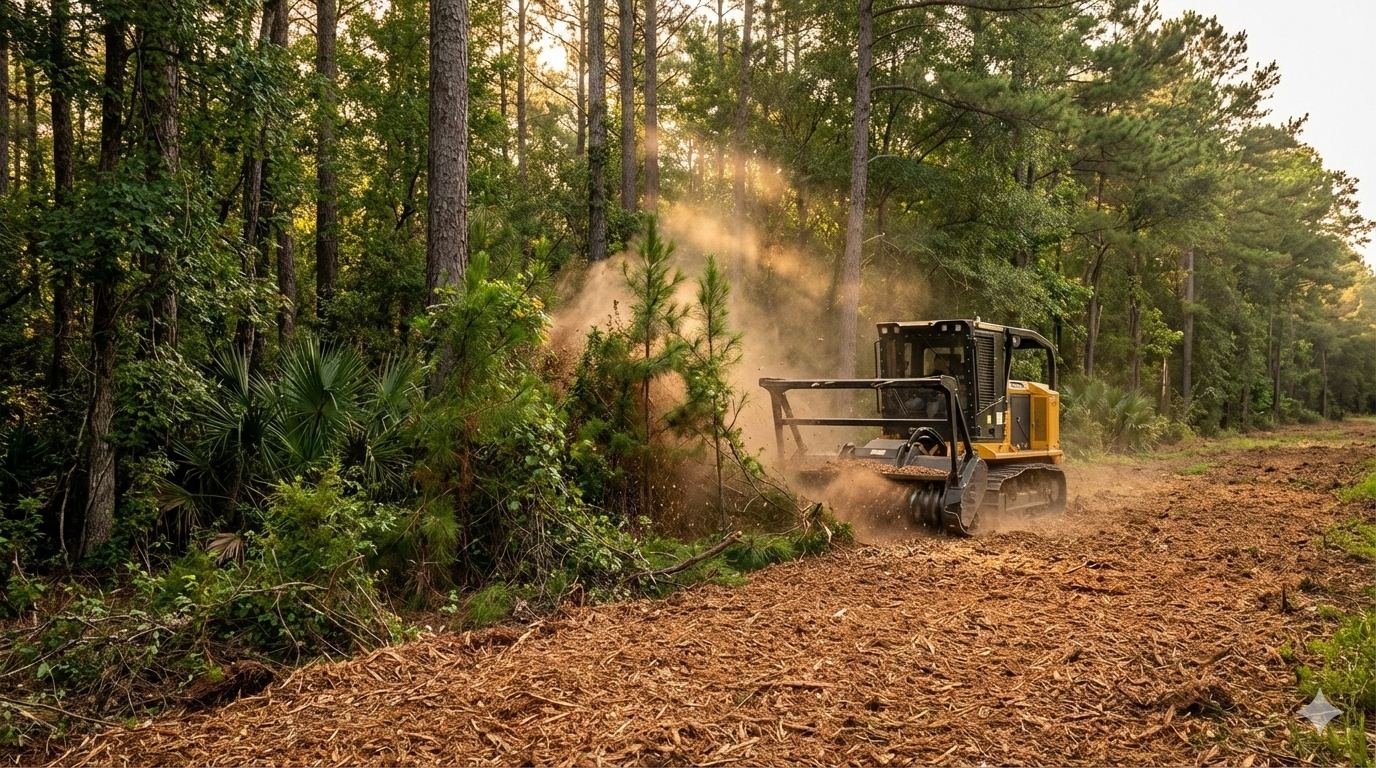
LAND CLEARING DUBLIN GA — LAURENS COUNTY & SURROUNDING AREAS
Whether your property is a wooded residential lot, overgrown acreage, or raw land needing to be ready for a home site or septic system, professional land clearing services handle the full scope of clearing work — free on-site estimates before any work begins.
How much does land clearing cost in Dublin, Laurens County, Georgia?
Land clearing in Dublin, Laurens County costs $500 to $1,500 per acre for light brush, $1,500 to $3,500 for mixed trees, and $3,500 to $6,000 or more per acre for heavily wooded land. Cecil clay loam soils erode quickly when cleared, and Georgia EPD requires permits for disturbances over one acre throughout Laurens County.
We serve residential, commercial, and agricultural property owners throughout this region. Local Cecil series clay loam soils compact and erode rapidly when disturbed — Georgia EPD requires a Land Disturbing Activity permit for any project over one acre. With modern equipment and experienced operators, we specialize in professional lot clearing, forestry mulching, brush clearing, vegetation clearing, and site preparation across the area. Whether you need to reclaim overgrown pasture land or prepare a commercial development site, we deliver efficient, environmentally responsible solutions with free estimates. Land grubbing — removal of root systems and buried organic material below grade — is included in our full site preparation scope for properties requiring a clean finish for foundations and septic drain fields.
PROPERTY CLEARING SERVICES FOR LAURENS COUNTY
We offer 8 clearing services for property owners — from overgrown residential lots to full-acre forestry mulching for new construction throughout the region.
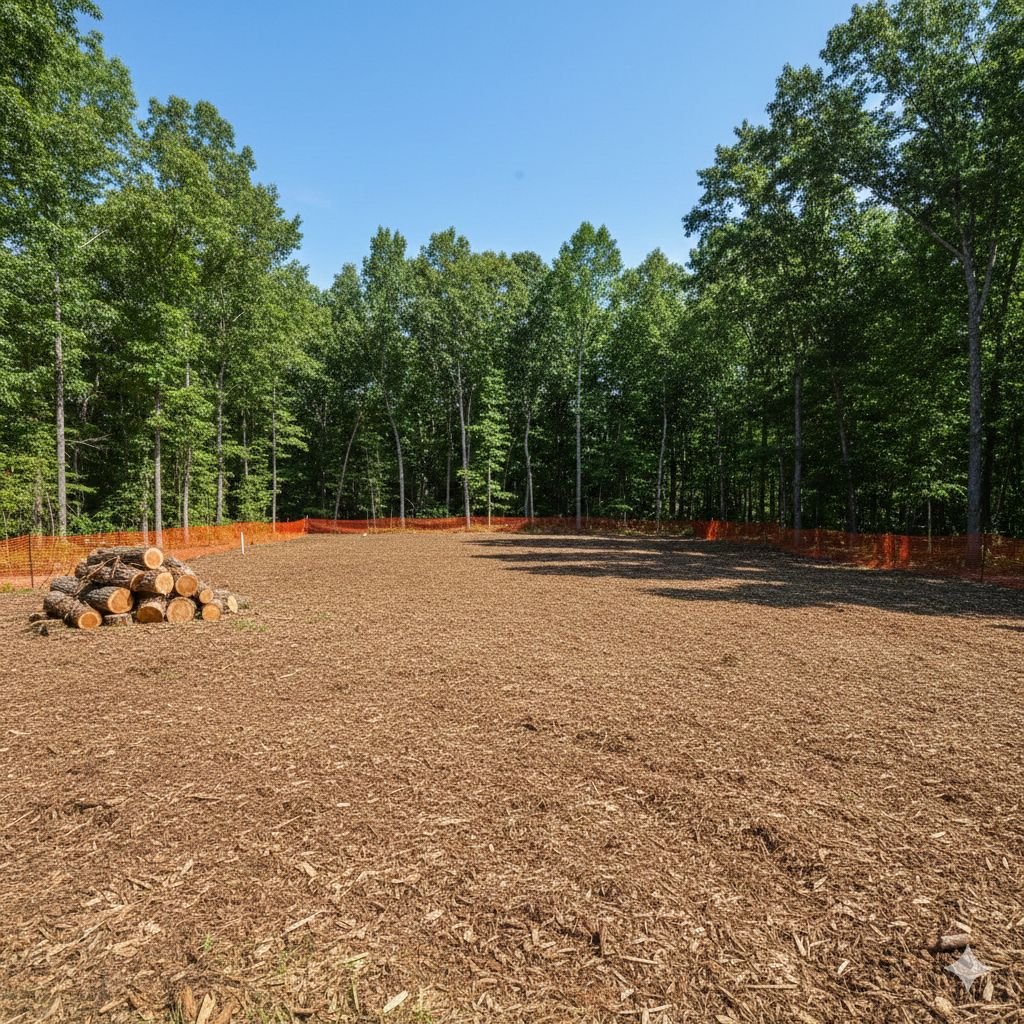
Lot Clearing
Complete residential and commercial lot clearing. Fast, efficient service to prepare your land for construction or development.
Learn More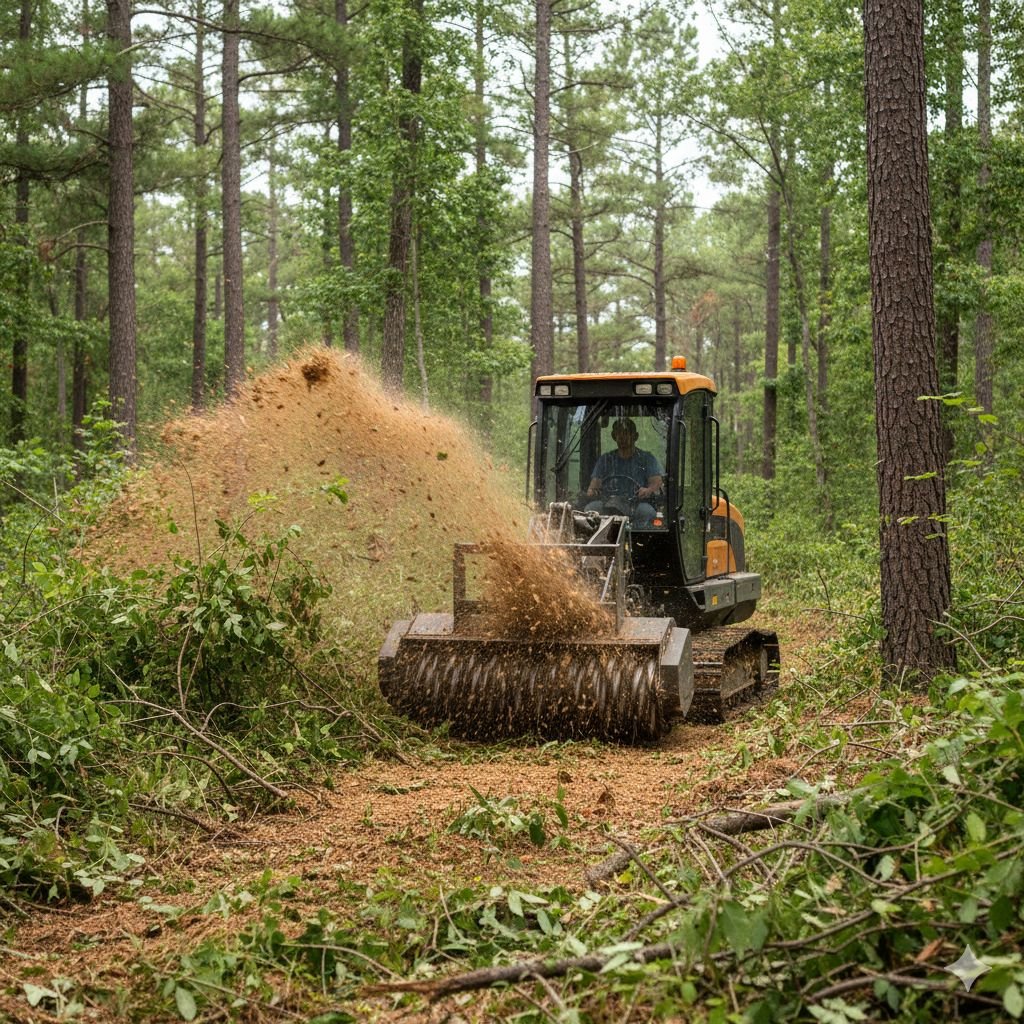
Brush Clearing
Remove overgrown brush and undergrowth. Perfect for reclaiming overgrown land and improving property appearance.
Learn More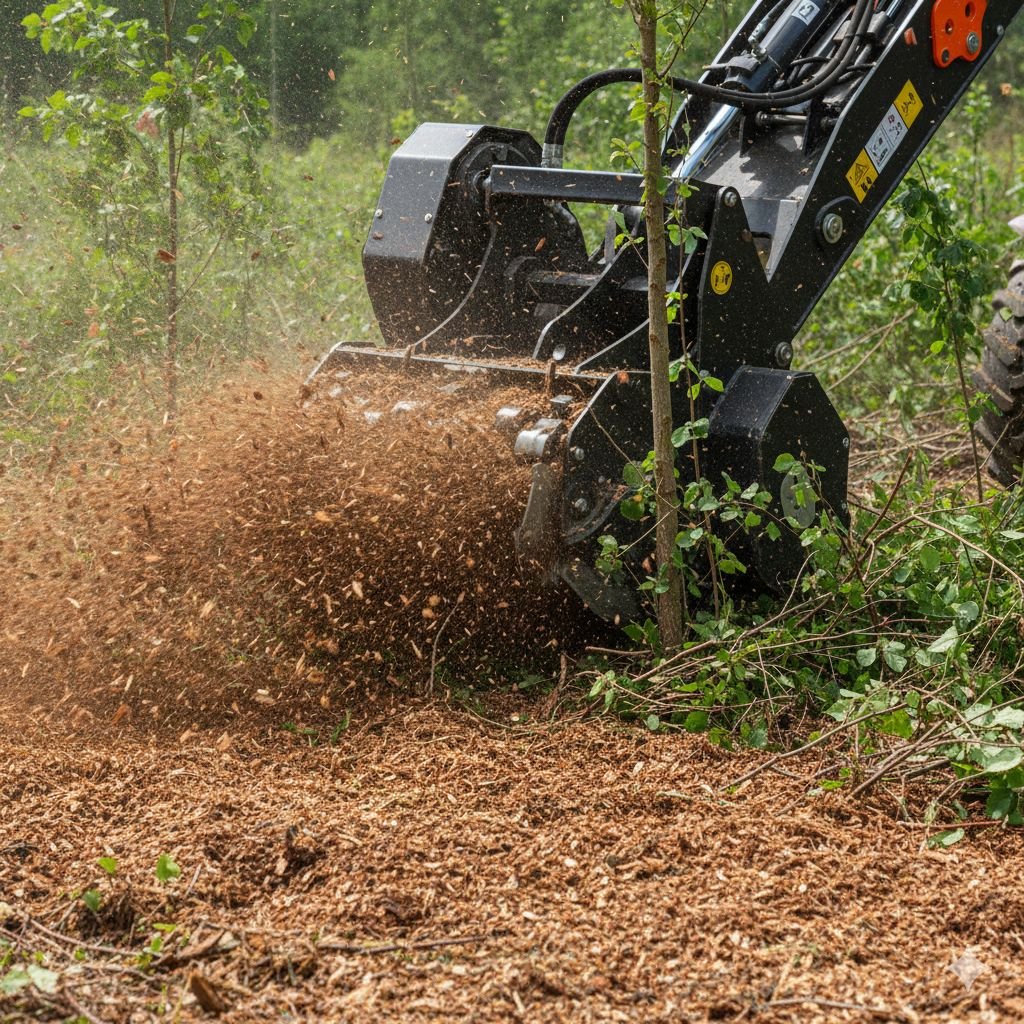
Forestry Mulching
Eco-friendly single-pass clearing using specialized equipment that grinds vegetation into nutrient-rich mulch left on-site.
Learn More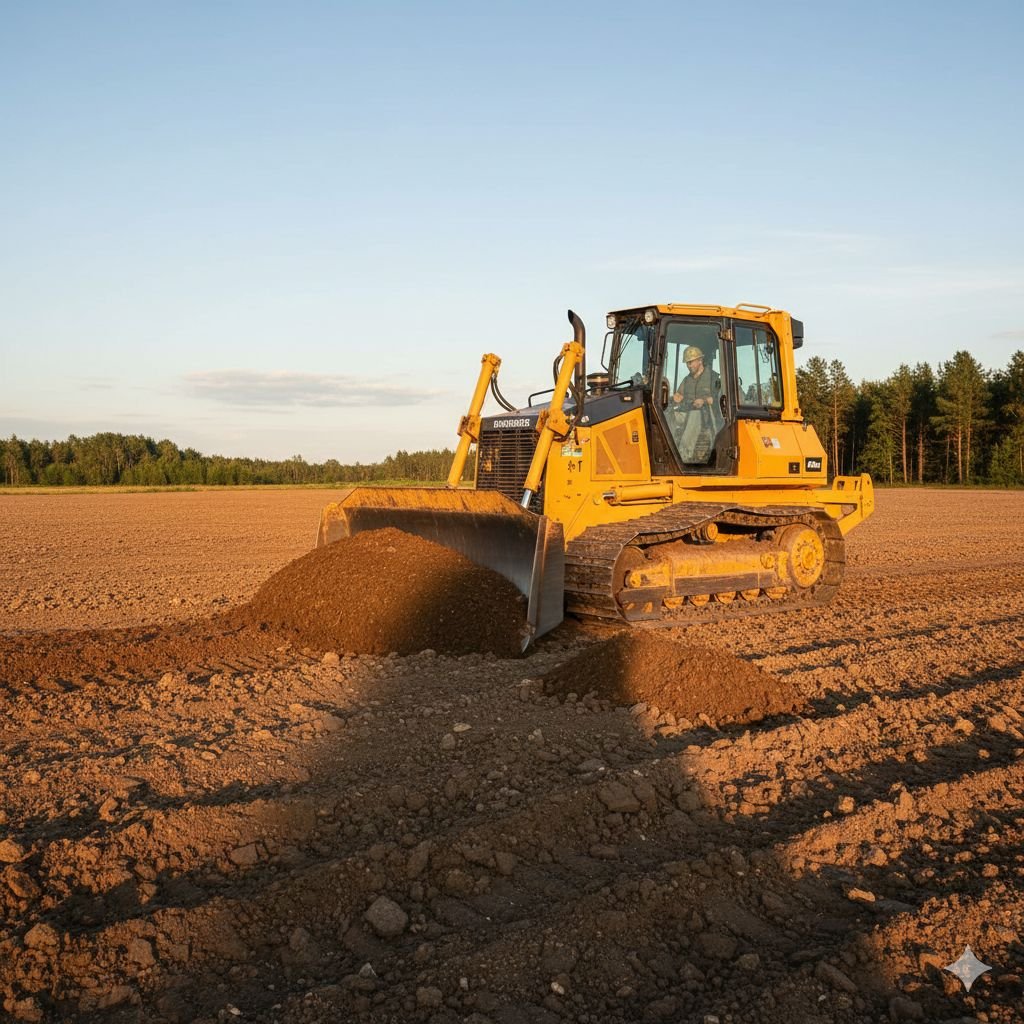
Land Grading
Professional land leveling and grading for proper drainage and construction preparation.
Learn More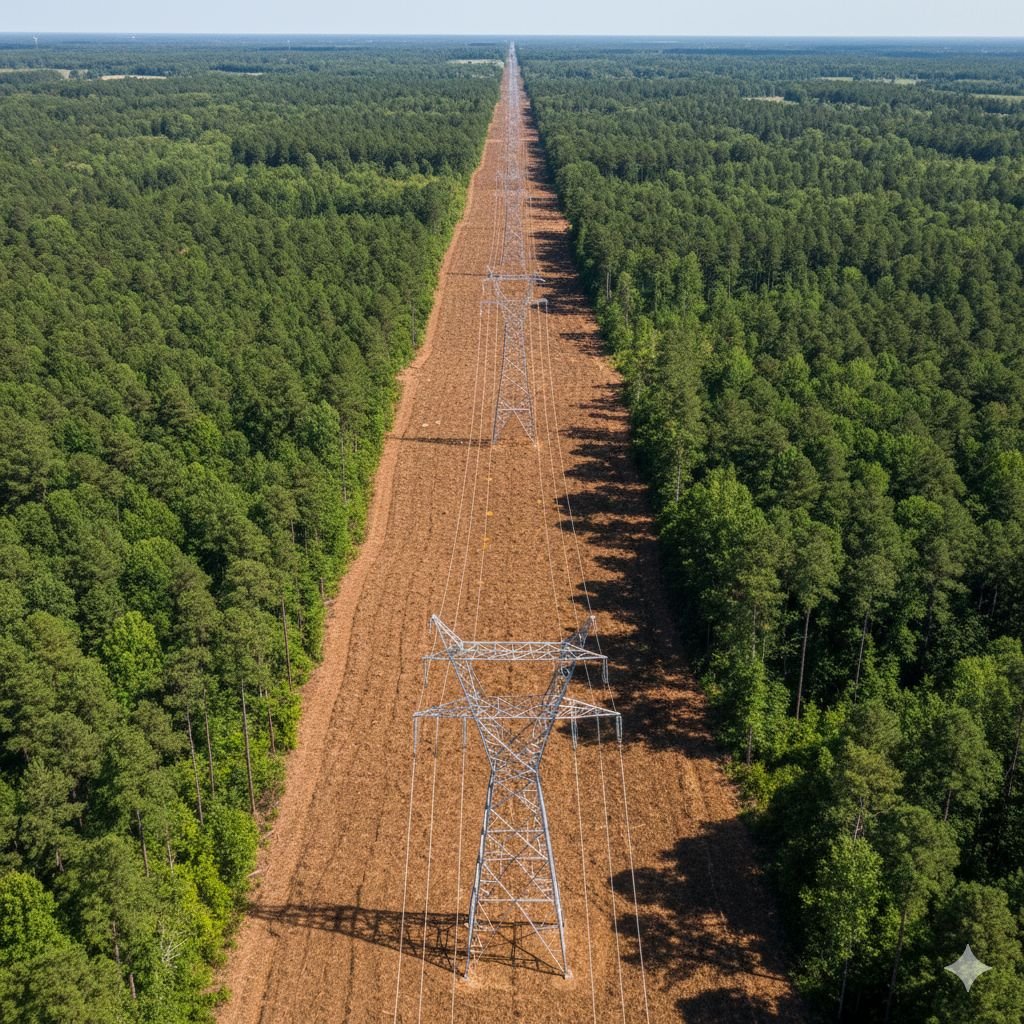
Right of Way Clearing
Clear rights of way for utilities, roads, and pipelines. Fully compliant with Georgia regulations and local ordinances.
Learn More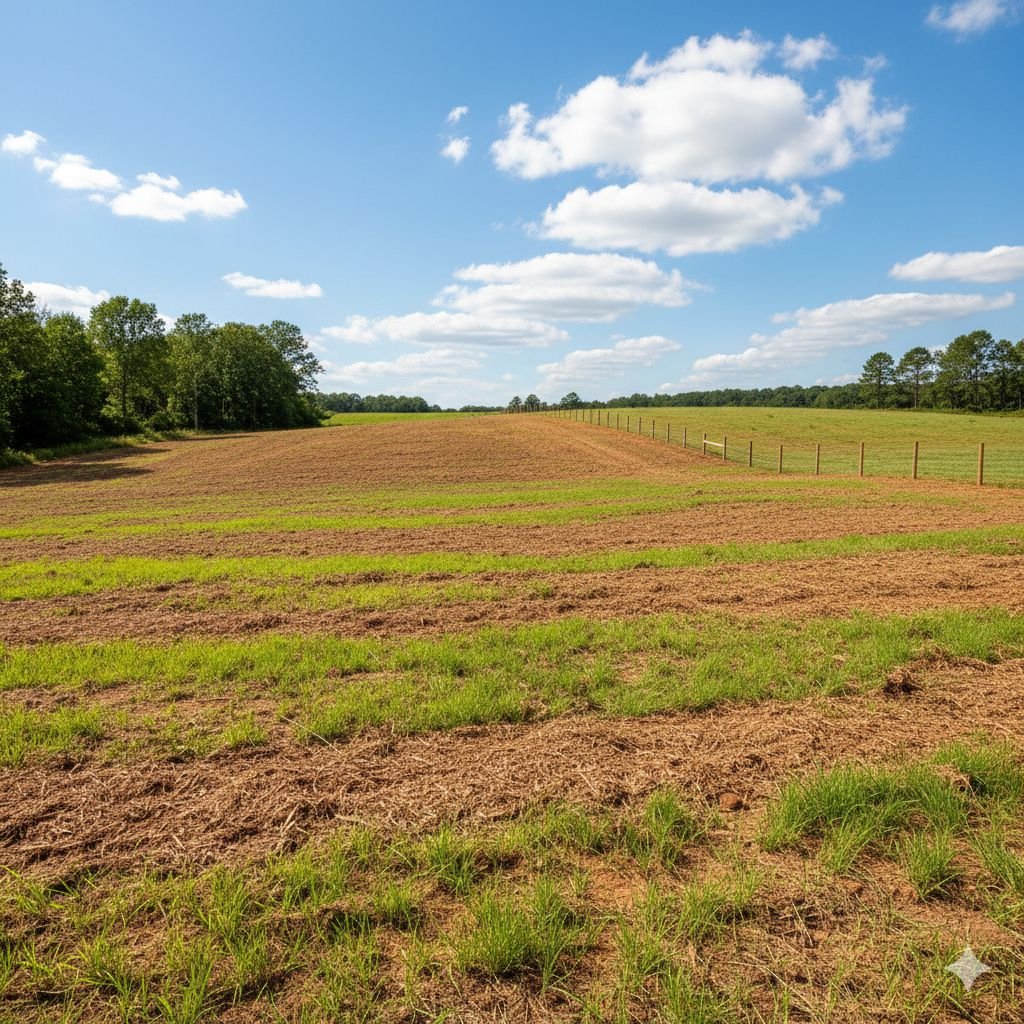
Pasture Clearing
Transform overgrown land into usable pasture for agricultural purposes. Serving farms and agricultural properties throughout the region.
Learn More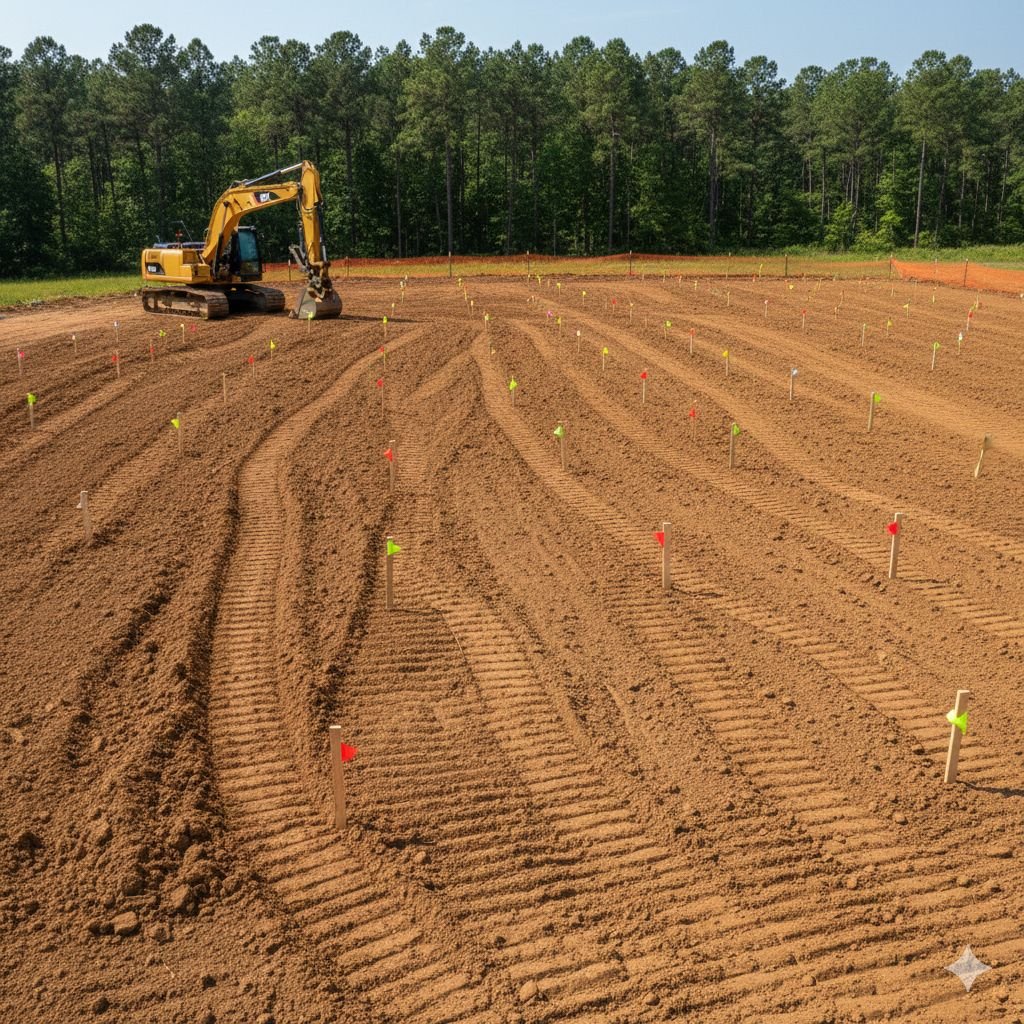
Site Preparation
Complete site preparation for residential and commercial construction. Get your land construction-ready with professional clearing and grading.
Learn More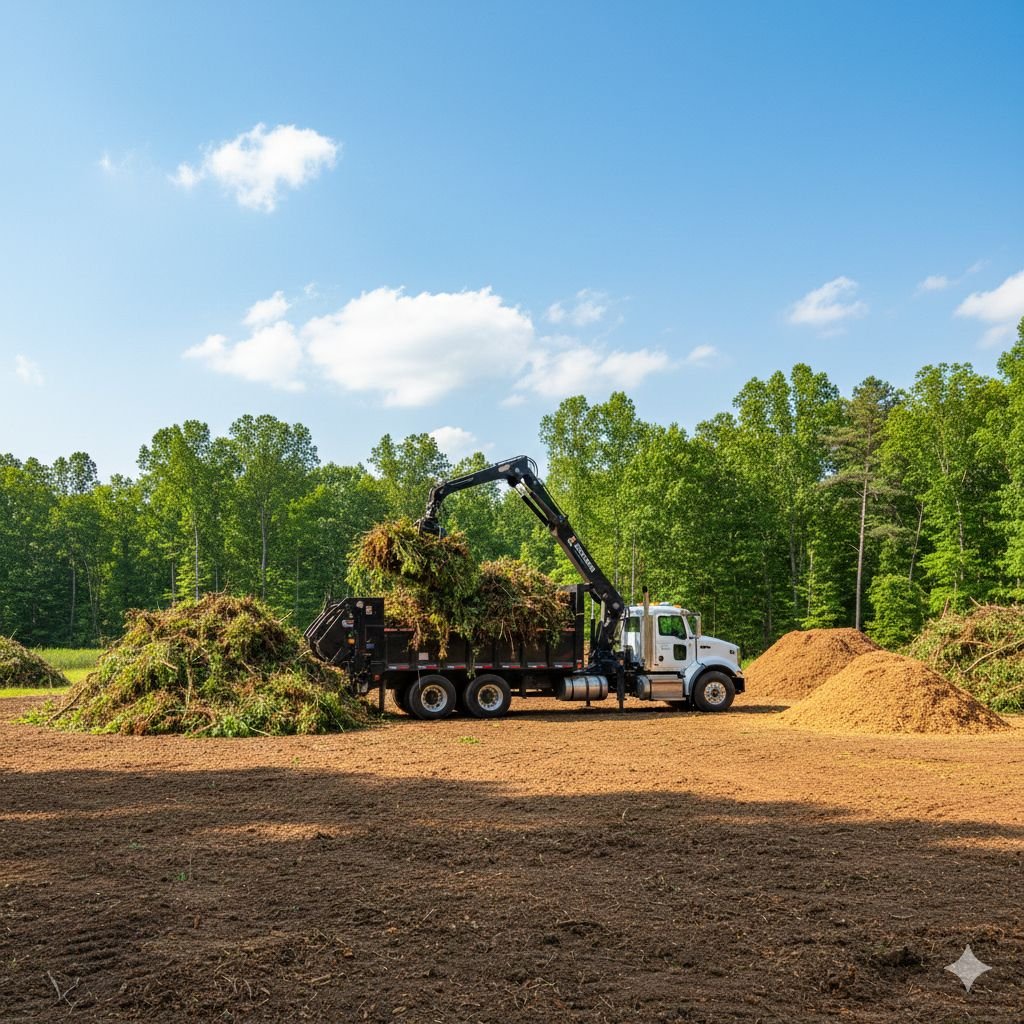
Debris Removal
Post-clearing debris removal and cleanup. Leave your land clean and ready for the next phase.
Learn MoreTHE DUBLIN LAND CLEARING ADVANTAGE
Free On-Site Estimates
Every project starts with a free on-site assessment — we evaluate vegetation density, terrain, access, and finish grade before quoting so the number you get reflects the actual job.
Modern Equipment
Forestry mulchers, tracked excavators, and bulldozers sized for middle Georgia's hardwood and pine — equipment matched to the job, not whatever happens to be available.
Fast Response
On-site estimates within 48 hours for most properties — we assess vegetation density, access, terrain, and finish grade before quoting so there are no surprises.
Local Family-Owned
Based in Dublin and serving Laurens County only. Local knowledge of middle Georgia soil conditions makes our work more efficient than national franchises routing jobs from out of state.
Clearing land is often the first step in a larger rural property project. If trees need to come down before clearing begins, Tree Service Dublin provides professional removal and trimming throughout Laurens County. Once the site is cleared, Dublin Gravel installs the access roads and driveways every rural property needs.
Developing raw land often means clearing before drilling a well or installing a septic system. Dublin Well Drilling handles residential and commercial wells throughout the area, and Dublin GA Septic provides septic installation, pumping, and repair across the same service area.
How much does land clearing cost in Laurens County, Georgia?
Land clearing in this area typically costs $500 to $1,500 per acre for light brush, $1,500 to $3,500 per acre for mixed trees, and $3,500 to $6,000+ per acre for heavily wooded land. Local Cecil clay loam soils erode rapidly when exposed, requiring Georgia EPD Land Disturbing Activity permits for projects over one acre.
CLEARING COSTS IN LAURENS COUNTY
Clearing and throughout Laurens County typically ranges from $1,500 to $5,000 per acre depending on tree density, slope, and whether stump removal is included.
- Light brush and undergrowth: $500 to $1,500 per acre
- Mixed brush and small trees: $1,500 to $3,500 per acre
- Heavily wooded land with large timber: $3,500 to $6,000+ per acre
- Forestry mulching (all-in-one): $1,000 to $3,500 per acre, or $150 to $400 per hour
- Stump grinding: $75 to $150 per stump
- Site grading after clearing: $500 to $2,000 depending on scope
FREQUENTLY ASKED QUESTIONS
Everything you need to know about lot clearing, forestry mulching, brush clearing, and site preparation services in the Laurens County area.
How much does land clearing cost?
Costs typically range from $500 to $1,500 per acre for light brush, $1,500 to $3,500 per acre for mixed brush and small trees, and $3,500 to $6,000+ per acre for heavily wooded land with large timber. Forestry mulching runs $1,000 to $3,500 per acre as an all-in-one alternative. Stump grinding adds $75 to $150 per stump and site grading adds $500 to $2,000 depending on scope. We provide free on-site estimates for all projects.
What is included in land clearing services?
For most projects, standard services include removal of trees, brush, undergrowth, and surface debris from your property. Depending on scope, services may also include stump grinding, rough grading, and debris disposal or mulching — but these are often quoted as separate line items, so confirm what is and isn't included before signing a contract. Always ask whether the quote covers stump removal, hauling, and initial grading or only vegetation removal.
Do I need a permit to clear land in Georgia?
Georgia EPD requires an erosion, sedimentation, and pollution control permit for any land disturbance over one acre. Disturbances under one acre within 200 feet of a year-round stream also require permits regardless of acreage. We help property owners throughout the area understand which permits apply and ensure compliance before work begins.
Does land clearing include stump removal?
Most property owners are surprised to learn that stump removal is not always included in standard clearing — most contractors quote clearing and stump grinding as separate line items. If your project requires a clean finish grade for construction, a foundation, or a septic drain field, confirm that stumps will be ground to grade or removed. Stump grinding in this area typically adds $75 to $150 per stump depending on diameter.
How long does it take to clear an acre of land?
A wooded lot typically takes one to two days using a forestry mulcher, which can process two to five acres per day depending on vegetation density. Traditional clearing with a bulldozer takes two to four days per acre when timber is heavy and debris requires hauling. Small residential lots under one acre often take four to eight hours with the right equipment.
What is the best method for clearing wooded land?
The best clearing method depends on what you plan to do with the land afterward. Forestry mulching is ideal for brush control, pasture reclamation, and access roads because it preserves topsoil and eliminates debris piles — critical on middle Georgia's red clay where exposed soil erodes quickly. Traditional clearing with a bulldozer or excavator is better for construction sites requiring a clean finish grade with all organic material removed.
What is forestry mulching and how does it work?
Forestry mulching is a single-pass clearing method that uses a machine with a drum mulching head to grind trees, brush, and undergrowth into mulch at ground level in one operation. The mulch stays on-site, protecting middle Georgia's red clay from erosion, suppressing weeds, and adding organic material back to the soil. Forestry mulching typically costs $1,000 to $3,500 per acre and requires no burn permits.
Can land clearing cause soil erosion?
Land clearing does expose soil to erosion — especially on properties with middle Georgia's red clay subsoil, which erodes rapidly once vegetation is removed. Best practices include prompt seeding of cleared areas, erosion control blankets on slopes, and grading to direct runoff away from streams. Georgia EPD requires an erosion and sediment control plan for any disturbance over one acre, which must include site-specific stabilization measures.
How much does forestry mulching cost per acre?
Forestry mulching typically costs $1,000 to $3,500 per acre as an all-in-one clearing method, or $150 to $400 per hour depending on equipment size and vegetation density. Compared to traditional clearing, forestry mulching often costs less overall because there is no separate debris hauling, burn permit, or site cleanup required. We provide free estimates for all forestry mulching projects throughout the region.
What equipment is used for land clearing?
Professional clearing crews use forestry mulchers (250–400 horsepower), bulldozers, tracked excavators, and skid steers with clearing attachments. Equipment selection depends on vegetation type, terrain, and desired outcome — a forestry mulcher excels on brush and small timber while a bulldozer handles large trees and rough grading. Middle Georgia's mix of hardwood, pine, and dense understory often requires more than one equipment type on the same job.
When is the best time to clear land in Georgia?
Late fall through early spring — roughly November through March — is the optimal window because vegetation is dormant, the ground is firmer, and there is less undergrowth to work through. Firm ground is especially important in middle Georgia because red clay softens significantly in wet conditions, making equipment operation difficult. Summer clearing is effective but can face delays from afternoon thunderstorms and saturated soil after heavy rain.
Does clearing land increase property value?
Clearing wooded or overgrown land generally increases usable value and marketability, particularly when the cleared land becomes suitable for construction, agriculture, or pasture use. A cleared and graded lot is easier to permit, develop, and sell than raw wooded acreage. The value increase depends largely on what the land can be used for once cleared — a lot prepared for a home site adds more value than a partially cleared pasture.
How do I clear heavily wooded land?
Clearing heavily wooded land with large hardwood or pine timber requires tracked equipment — typically a large bulldozer or excavator — to fell, push, and stage timber before grinding or hauling. For properties with trees 12 inches or larger in diameter, plan for multiple equipment passes: a forestry mulcher for understory and small trees, then heavier machinery for large timber removal. A site assessment before quoting is essential because timber density and access routes dramatically affect equipment selection and final cost.
What is the difference between land clearing and grubbing?
Property owners typically pay for two distinct scopes: clearing removes above-ground vegetation — trees, brush, and debris — while grubbing removes root systems, stumps, and organic material below the surface. Grubbing is required before concrete foundations, septic systems, and drain fields because buried organic material decomposes and causes settling over time. Most site preparation contracts include both clearing and grubbing as a single scope of work.
Can I clear land myself without equipment?
Hand clearing small areas of light brush is possible, but heavily wooded or overgrown acreage requires professional equipment to complete safely and efficiently. Hand clearing even a quarter acre of thick Georgia understory is physically intensive and leaves stumps and root systems that cause problems for construction and drainage later. Most property owners find that professional clearing costs less in the long run when accounting for equipment rental, debris disposal, and the risk of incomplete root removal.
How much does it cost to clear a lot for a house?
Clearing a residential lot for home construction typically costs $1,500 to $6,000 depending on lot size, vegetation density, and whether stump removal and rough grading are included. A lightly wooded half-acre lot might run $1,500 to $3,000; a heavily wooded one-acre lot with large timber can reach $4,000 to $8,000 once stump grinding and initial grading are added. We provide free on-site estimates for all residential lot clearing projects.
What happens to trees and debris after land clearing?
Cleared trees and debris are handled through forestry mulching (ground into mulch left on-site), hauling to an approved disposal facility, or open burning where local regulations and Georgia Forestry Commission rules permit. Forestry mulching is the most cost-effective and environmentally responsible option for most properties because it eliminates hauling costs and burn permit requirements while improving soil organic content. For construction sites requiring a clean finish grade, debris is typically chipped and removed or hauled off-site.
Is burning cleared debris legal in Georgia?
Open burning of clearing debris is regulated by Georgia Forestry Commission rules and requires a free burn permit issued at georgiawildfire.com before any burning begins. Burns are prohibited during high-fire-danger conditions, within 25 feet of any structure, and during certain wind conditions. Forestry mulching is a common alternative that eliminates the need for burn permits entirely while returning organic material to the soil.
How do I prepare land for construction after clearing?
Land preparation after clearing involves stump grinding or removal, rough grading to establish drainage, subgrade compaction, and coordination with your builder or engineer on finish grade specifications. Middle Georgia's red clay requires careful attention to drainage because it holds water and can create foundation and septic drain field problems if not graded correctly. We provide complete site preparation services following clearing to get your property construction-ready.
What should I ask a land clearing contractor before hiring?
Ask any contractor whether stump removal is included in the quote, how debris will be handled, which permits they will manage, whether they carry liability insurance, and how they address erosion control after clearing. Ask for a written quote that separates clearing, stump grinding, grading, and debris removal so you can compare bids accurately. A contractor who offers a free on-site assessment before quoting is more likely to give an accurate price than one who quotes by acreage alone.
What is the difference between forestry mulching and land clearing?
Property owners typically pay less for forestry mulching than traditional clearing because forestry mulching is a single-pass method — one machine grinds trees, brush, and undergrowth into mulch at ground level with no hauling, no burning, and no separate cleanup. Traditional clearing uses bulldozers or excavators to push and pile vegetation, which then requires a separate disposal step. The key difference is what happens to the material: forestry mulching returns it to the soil as mulch, while traditional clearing removes it from the property. For construction sites requiring a clean finish grade with all organic material removed, traditional clearing is necessary. For pasture reclamation, fire breaks, right-of-way maintenance, and residential properties not going to construction, forestry mulching is usually faster, cheaper, and better for the soil.
Do I need to clear land before drilling a well?
For most projects involving well installation, yes — clearing the access route and drill site before the well crew arrives saves time and reduces drilling costs. A well drill rig requires a clear path wide enough for the truck and equipment, and the drill site itself should be free of trees, stumps, and dense brush. Dublin Well Drilling can advise on how much clearance they need for your specific property and drill rig before you schedule clearing.
Do I need to clear land before installing a septic system?
Georgia EPD requires that the septic drain field area be clear of trees and large shrubs before installation — tree roots can penetrate and damage drain field lines over time, and the installation equipment needs open access to dig and place the field. For most properties, clearing of the drain field area and access route should be completed before the septic installer surveys or installs. Dublin GA Septic can identify exactly which areas need to be cleared based on your lot's soil evaluation and system design before work begins.
What is the difference between forestry mulching and logging?
Property owners often ask this because the area has significant hardwood and pine timber acreage. Logging removes merchantable timber from the property for sale to a sawmill or pulp mill — the trees have commercial value and are taken off-site. Forestry mulching grinds trees, brush, and undergrowth into mulch left on the property — nothing is sold, and the focus is clearing the land rather than harvesting timber. Logging typically leaves slash piles, stumps, and significant site disturbance that then requires a second round of clearing. Forestry mulching after a timber harvest is a common approach: loggers take the merchantable timber, then a forestry mulcher cleans up the slash, small trees, and undergrowth left behind in a single pass.
Can you clear land after a timber harvest?
A wooded lot typically takes one to two days to clean up after a timber harvest using a forestry mulcher, which processes slash piles, logging debris, small trees, and undergrowth left by the logging crew. Post-harvest clearing is one of the most common uses for forestry mulching because loggers leave significant debris — tops, limbs, small-diameter trees not worth hauling — that must be processed before the land can be used for pasture, construction, or replanting. We work on post-harvest properties throughout the area.
How do you clear pine timber land?
Clearing pine timber land depends on the size of the timber and the intended use of the land after clearing. Mature pine stands 10 inches and larger typically require a large bulldozer or excavator to fell and push trees before grinding — a forestry mulcher alone cannot efficiently handle large pine timber. Once large pines are felled and staged, a forestry mulcher processes the crowns, understory, and smaller-diameter material. If the property went through a timber harvest first, forestry mulching alone can handle the slash and remaining small trees. Pine land with a heavy understory of sweetgum, privet, and hardwood brush also benefits from forestry mulching to control regrowth after clearing is complete.
Does Dublin Land Clearing serve all of Laurens County?
Yes, Dublin Land Clearing provides land clearing, forestry mulching, and site preparation throughout Laurens County, including Dublin, Dexter, Dudley, East Dublin, Montrose, and Rentz. Land clearing costs in the county typically range from $500 to $1,500 per acre for light brush up to $3,500 to $6,000+ per acre for heavily wooded land, and forestry mulching helps protect Laurens County's red clay soil from erosion during the clearing process. We provide free on-site estimates for properties anywhere in the service area.
GET A FREE QUOTE
Fill out the form below and we'll get back to you with a detailed estimate for your clearing project.
SERVING LAURENS COUNTY
We provide clearing services throughout Laurens County, Georgia, serving Dublin and surrounding communities including Dexter, Dudley, East Dublin, Montrose, and Rentz.